

Interior Design
Boeddeker Park / WRNS Studio
San Francisco’s Tenderloin is the City’s densest neighborhood, and most of its residents live below the poverty line in small apartments without access to back yards or green space. Re-built in 1985, Boeddeker Park never lived up to its potential as the neighborhood’s largest public park. Early attempts to address safety concerns resulted in a maze of fences and visibility across the space was poor. Neighbors called it “Prison Park.” In response, The Trust for Public Land, in partnership with the City of San Francisco, teamed with WRNS Studio to redesign and completely rebuild the one-acre park and clubhouse to meet the needs of the community.
Before You Unpack From a Move, Ask Yourself These 5 Questions (8 photos)
A home that you’ve just moved into is your blank canvas before you unpack. You are in control of how you will use the space. Understandably, you may be eager to unpack and just be done with the moving process.
However, spending a little time upfront to plan how…
However, spending a little time upfront to plan how…



Diébédo Francis Kéré’s Serpentine Pavilion Photographed by Laurian Ghinitoiu
Following the opening of the 2017 Serpentine Pavilion, designed this year by Diébédo Francis Kéré (Kéré Architecture), photographer Laurian Ghinitoiu has turned his lens to London. Designed to mimic a tree, or a canopy of trees, the wooden structure has been designed to fuse cultural references from Kéré’s home town of Gando in Burkino Faso with more “experimental” construction techniques. His ambition is that the pavilion becomes a social condenser – “a symbol of storytelling and togetherness.”
Rosa Muerta / ARCO mais
Situated on the northern side of S.Miguel Island, the plot has an open view over the sorrounding fields and woods.
Francine Houben on Washington D.C.’s Central Library, A Balancing Act Between Mies and Martin Luther King Jr.
In the tenth episode of GSAPP Conversations, Jorge Otero-Pailos (Director of the Historic Preservation Program at Columbia GSAPP) speaks with Francine Houben, founder and creative director of the Dutch practice Mecanoo. Recorded before the school’s annual Paul S. Byard Memorial Lecture, their conversation centers on her practice’s work to renovate and redevelop the Martin Luther King Jr. Memorial Library in Washington D.C., Mies van der Rohe’s last building and only library project.
in return studio takes viewers on a winding journey of london’s underground
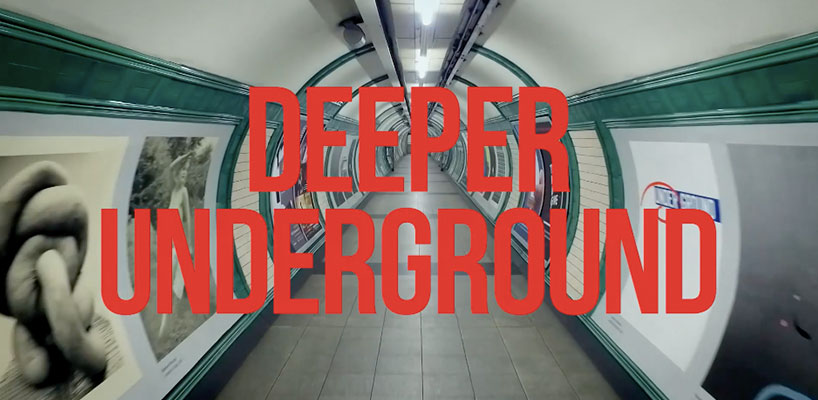
guus and tayfun of in return studio explore the symmetry of the iconic london underground.
The post in return studio takes viewers on a winding journey of london’s underground appeared first on designboom | architecture & design magazine.
Rinconada Margaritas / Luis Aldrete
The project is a development of vertical housing, deployed with three buildings in a total extension of 10,126m2. A fundamental part of the project has to do with the terrain, because it conserves a canyon with a significant density of trees and plants, so that 80% of the land is destined for green areas and open space, this represents a privilege, given its urban condition.
NOHlab and Buşra Tunç Create Immersive Installation Based on Centuries-Old Architecture
As part of the Third Istanbul Biennial, NOHlab and architect Buşra Tunç collaborated with HAS Architects to create OCULUS: an experiential light and sound-based installation. The exhibit focuses on employing a historic location, the Single-Dome Hall of the historic Istanbul Imperial Arsenal, to reinterpret a spatial moment using technology and design. The central theme of the project is the experimentation of permanence, illustrated in the juxtaposition between the dynamic visuals displayed on the temporary structure and the 16th-century architecture.
The Demolition of Delhi’s Hall of Nations Reveals India’s Broken Attitude to Architectural Heritage
On the morning of April 24th, Delhi’s architecture community reacted in shock and disgust to the news that the city’s Hall of Nations and the four Halls of Industries had been demolished. Bulldozers had worked through the previous night at the Pragati Maidan exhibition grounds in central Delhi, where the Indian Trade Promotion Organisation (ITPO) razed the iconic structures to the ground, ignoring pleas from several Indian and international institutions.